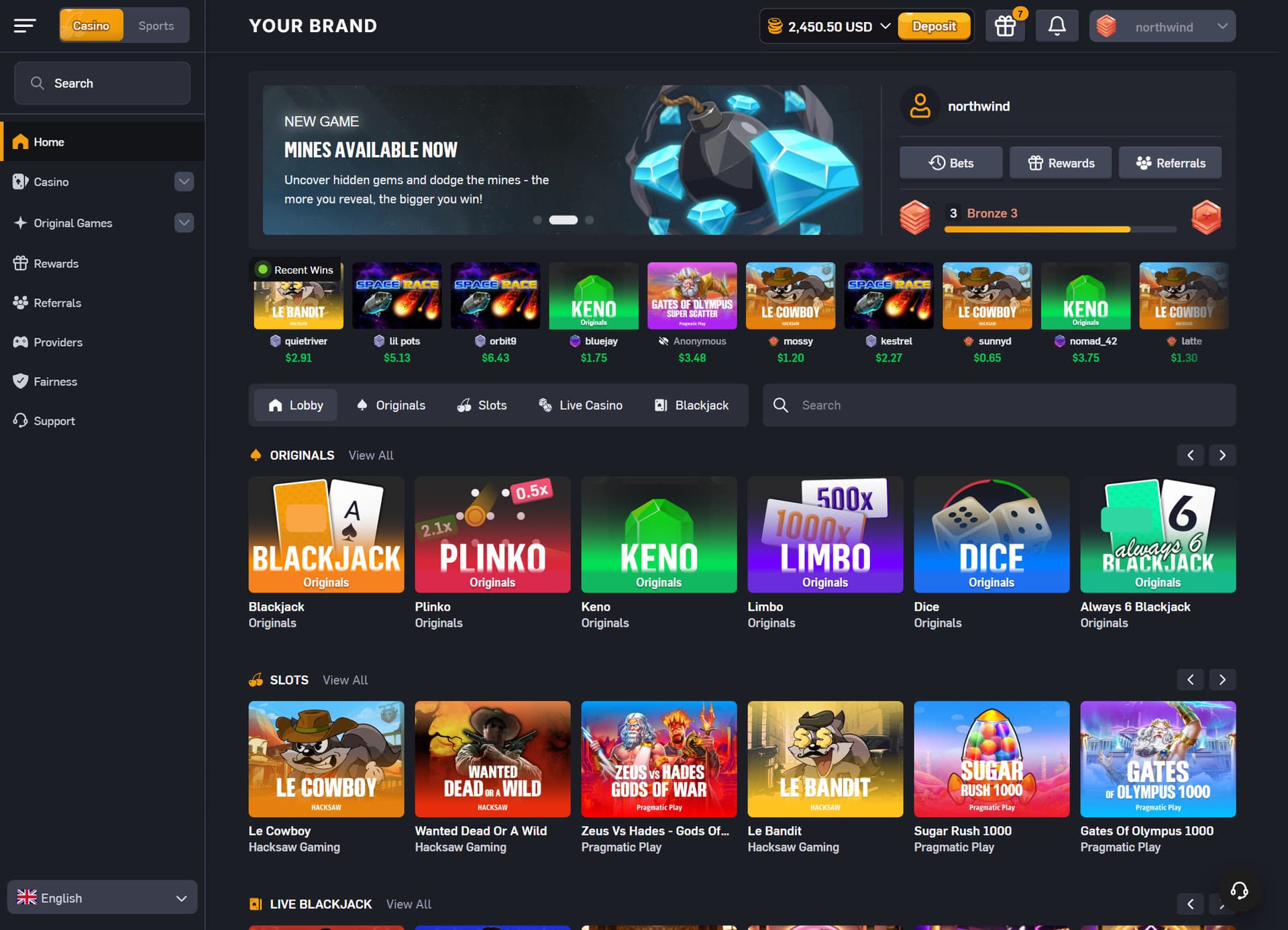
To start a crypto casino you need a company and a gaming licence, a platform with crypto payments built in, games, KYC and responsible gambling tools, and a way to reach players without Google or Meta ads. A credible first year costs roughly $150,000 to $500,000. Launch takes six to ten weeks on a white label, or three to six months on a turnkey platform with your own licence.
The eight steps
Decide your markets and your model
Where you take players, and whether a white label, a turnkey platform or your own team runs the casino.
One to five months
Form the company and get the licence
Anjouan to start cheaply and quickly, Curaçao for more weight with banks and suppliers.
Alongside the licence
Choose the platform
The player site, the wallet, the bonuses and the back office.
Alongside the licence
Add the games
An aggregator for the catalogue, originals for the house games.
Alongside the licence
Set up payments
Coins, networks, card to crypto, and your withdrawal rules.
Before launch
Put compliance in place
KYC, AML, responsible gambling, and the countries you block.
From three weeks before launch
Line up your first players
Streamers, affiliates and communities.
From the first day
Keep them playing
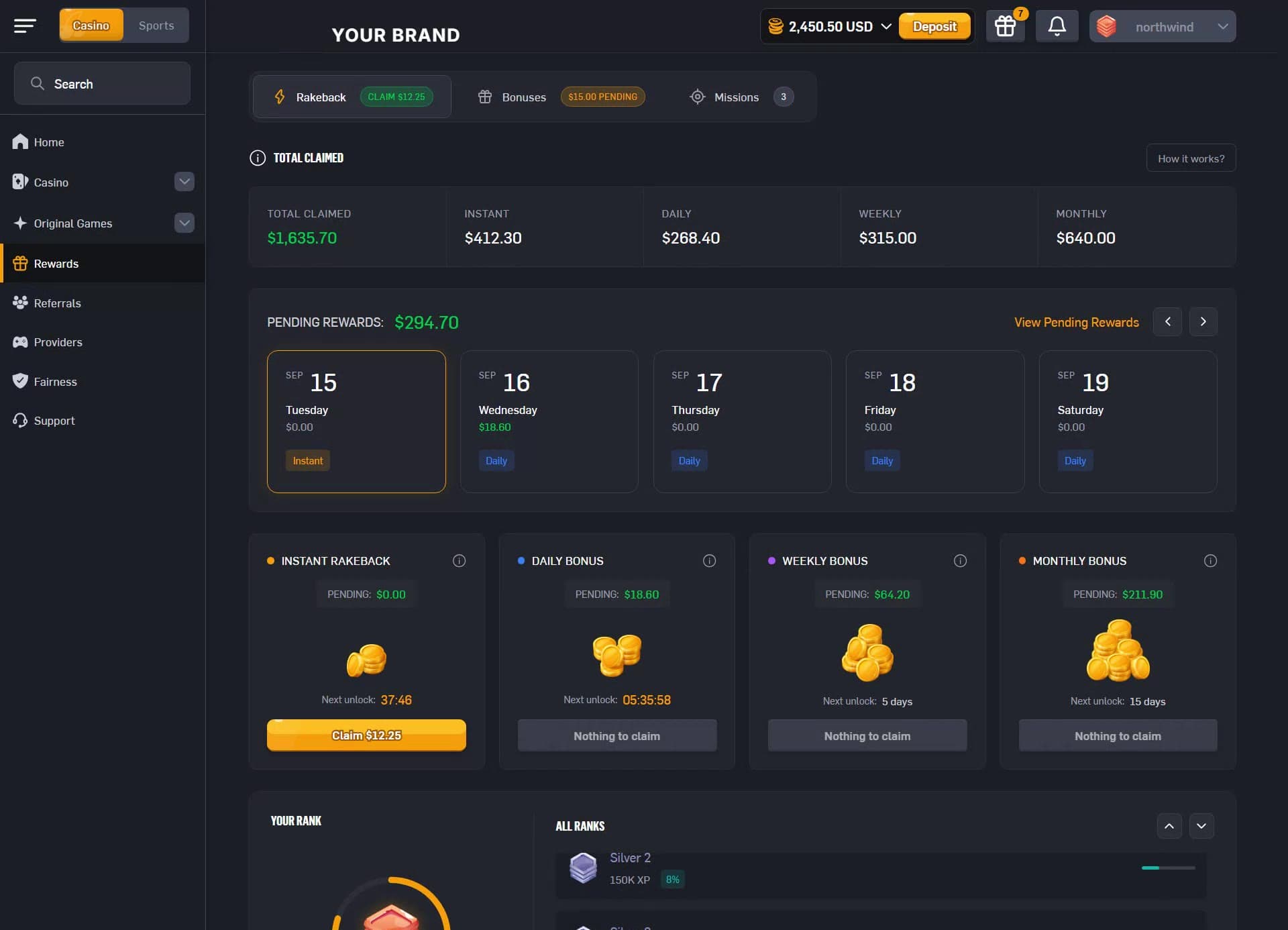
Rakeback, races, missions and a CRM.
1. Decide your markets and your model
Your target countries decide your licence, and your licence decides which countries you must block. Settle both before you pay anyone.
Then decide how the platform is run. A white label runs your brand under the provider's licence. A turnkey platform runs on your own licence, and the provider builds and hosts it. In-house means your own team runs it.
2. Form the company and get the licence
Anjouan is the cheapest and quickest licence for a crypto casino: €17,828 in regulator fees for the first year, from about a month to a few months to issue, crypto allowed, and no tax on gaming revenue. Its legal standing is disputed by the Comoros authorities, so treat it as a starting licence. Curaçao, rebuilt under a 2024 law, costs several times more and takes three to five months, but carries more weight with banks, studios and payment partners.
The application asks for game certificates and for your KYC, AML and responsible gambling policies, so the licence and the platform move together.
3. Choose the platform
The platform is the casino: the player site, the wallet, the games lobby, the bonuses, and the back office your team works in every day.
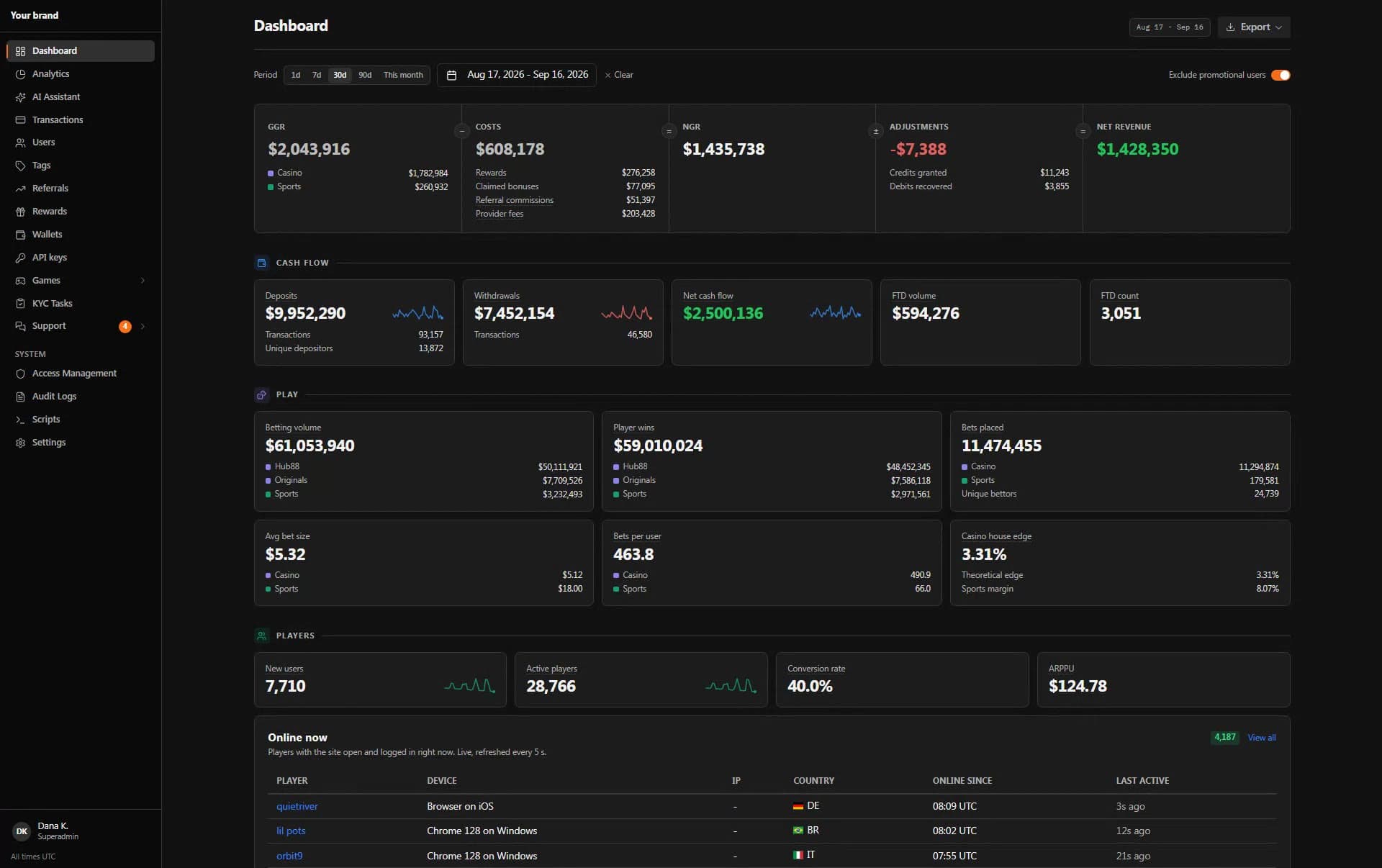
For a crypto casino, check that it has:
- Crypto wallets built in, with USDT and USDC on several networks, rather than a gateway bolted on
- Provably fair originals, the house games crypto players expect
- Rakeback, VIP levels, races and missions
- Affiliate and streamer tracking with a dashboard of its own
- A CRM and live chat that work from the same player data
- KYC in stages that you set to your licence, and blocking of excluded countries
- Your data exportable, with clear terms if you part ways
Pricing is usually a setup fee plus a share of revenue or a monthly fee. What matters as much as the price is what the package includes: a CRM, live chat or affiliate software bought separately each come with their own monthly bill.
4. Add the games
Few operators sign studios one by one. An aggregator gives you thousands of games through one integration and one contract. Studios take a share of the revenue their games make, and the aggregator adds 1 to 3% of that revenue on top. Some studios ask offshore licensees for extra documents or guarantees, so check the catalogue against your licence before you sign.
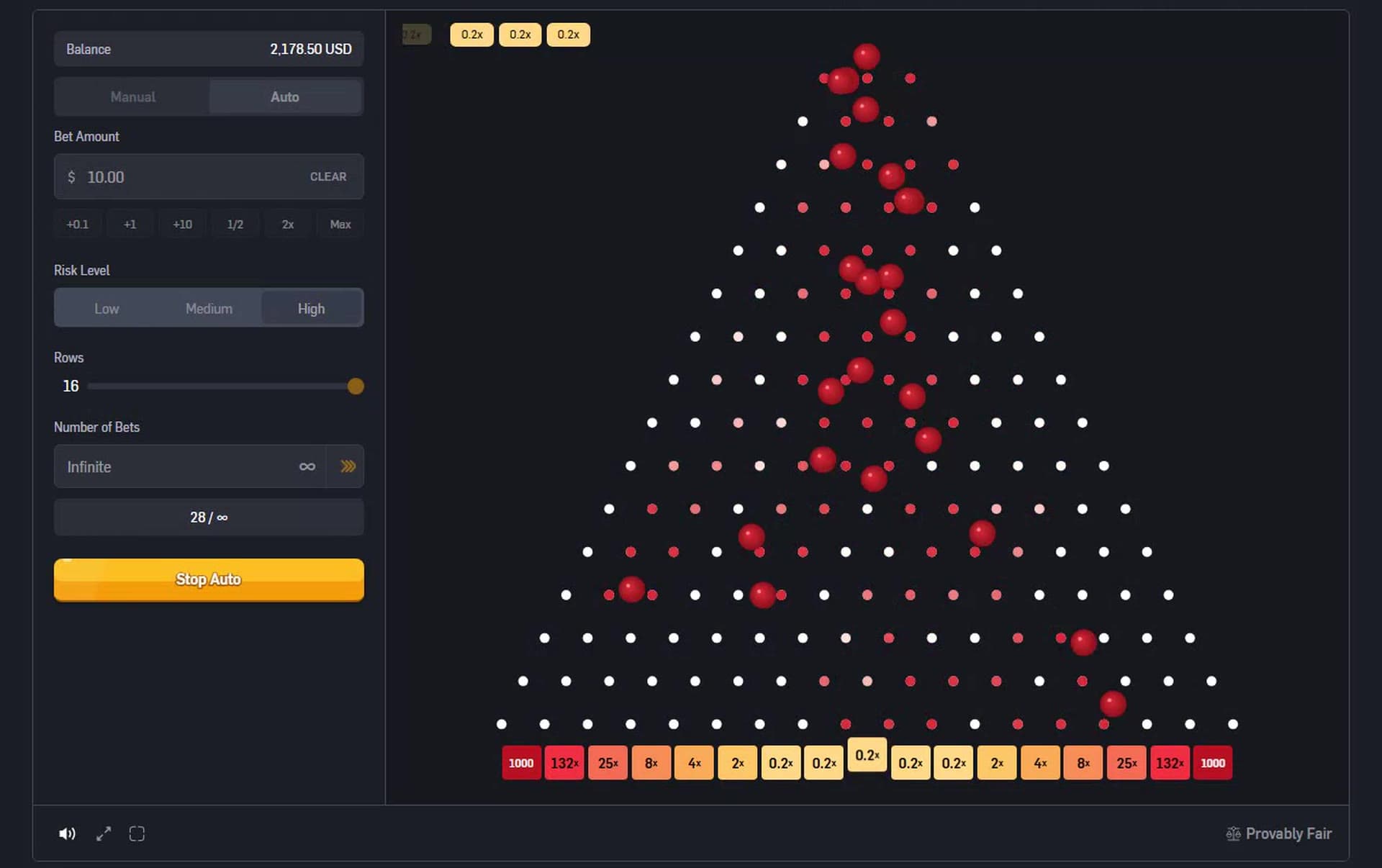
Originals are the simple house games, such as dice, crash, mines and Plinko. They carry no studio fee, and crypto players expect them to be provably fair: every round can be checked against seeds the player can see.
5. Set up payments
USDT is the most widely held stablecoin, and Tron carries close to half of it. A USDT transfer on Tron settles in about three seconds for one to three and a half dollars, which is why so many players use it.
There are two ways to take crypto:
- A payment gateway, which typically charges 0.5 to 1% of every transaction.
- Wallets built into the platform, where the only cost is the network's own fee.
6. Put compliance in place
Your licence requires AML and KYC procedures and a responsible gambling policy. KYC in stages keeps sign-up light: a player starts with basic details and verifies identity at the thresholds your licence and your AML policy set. Self-exclusion and deposit limits have to exist in the product, not only in the terms. Block the countries your licence and your partners exclude, by IP address at sign-up and again at KYC.
7. Line up your first players
Google and Meta take gambling ads only from operators licensed in the market they target, so crypto casinos grow through creators and communities.
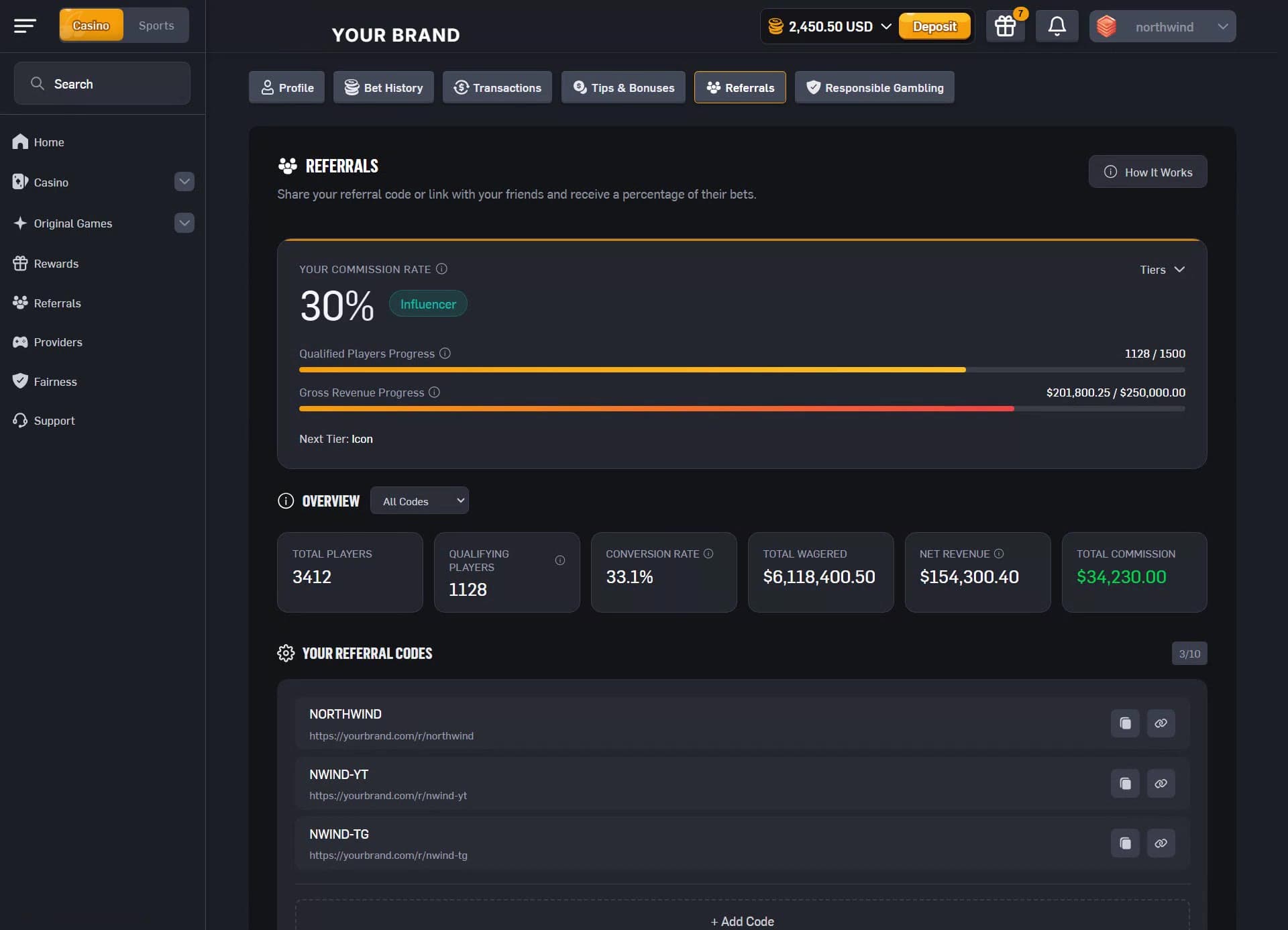
Clipping, Telegram communities and referral loops that pay out in crypto round it out. Give affiliates and streamers their own dashboard, so they can see their players and their earnings without asking you.
8. Keep them playing
Players compare rewards across casinos, so retention has to work from the first day. Rakeback returns a share of the house edge a player generates, usually 5 to 20% of the theoretical hold, credited continuously with few or no wagering strings. Races with live leaderboards, missions, VIP levels and a CRM that wins back lapsed players do the rest.
What it costs and how long it takes
| Item | First year |
|---|---|
| Licence and company | $25,000 to $60,000 |
| Marketing, launch quarter | $25,000 to $75,000 |
| Team and operations | $10,000 to $30,000 a month |
| Total, for a credible launch | $150,000 to $500,000 |
| Route | Time to launch |
|---|---|
| White label, on the provider's licence | 6 to 10 weeks |
| Turnkey, on your own licence | 3 to 6 months, including the licence |
Where BTX fits
BTX is a turnkey crypto casino platform: originals, crypto payments built in, rakeback, races, a CRM, live chat, affiliates and one back office, on your own licence. If you do not have a licence yet, we give full guidance through the application and introduce you to licensing agents. See the platform or compare the two plans.
This guide is general information, not legal or financial advice. Figures are market ranges and change over time.